
On this post I will highlight the best things to do and the best places to visit in the city of Seville in one day.
We woke up at Hotel Derby feeling restful and excited to continue with our visit to Seville. (See my Jerez de la Frontera & Seville’s Day 1 post). We went for breakfast which was in a room at the top of the hotel, next to a terrace with views of the city.
If you are planning a trip to the south of Spain and prefer to have everything organised by a tour, you should check the tours Tourradar offers to many places in Spain.
Tourradar has tours that suits every length of time and budgets and if you use my links to book your trip and enter code RoseG50 you will get a discount on your booking.
Subscribe to my blog, so you will not miss any of my posts published every week.
It was a small room full of people having their breakfast, and worse, not enough tables. The breakfast was not that great: very few options to choose from and one of the coffee machines was broken. However, we managed to serve ourselves and left as soon as we could to start our Seville visit.
Where is Seville? Below is a map showing the places we visited or passed by in Seville on Day 2:
A LITTLE BIT ABOUT SEVILLE
Seville started as a Roman city called Hispalis and was ruled by the Almoravids and Almohads Berber dynasties until 1248, when it was incorporated by the Crown of Castile.

Seville is not only one of the most beautiful cities in the south of Spain but also the capital of Andalusia. It is also known as the “Pearl of Andalusia”.

It is a busy tourist centre in Spain with many churches, landmarks, palaces, museums, and parks to explore. The main attractions in Seville are the Cathedral, the Alcazar, and Plaza de España and they should not be missed on a trip to Seville.

The “Cathedral of Seville”, the “Alcazar” and the “Archive of the Indies” are UNESCO World Heritage Sites.

The city is very lively with the many festivals that happen throughout the year, festivals such as “The Holly Week”, “Flamenco Bienal”, “Velá de Santiago y Santa Ana”, “Feria de Abril” and others.

It has a vibrant music and food scene that can be experienced in the many music venues and flamenco houses as well as the numerous tapas bars and restaurants in the city.
For more detailed information about the history of Seville and other facts, visit this LINK.
VISITING SEVILLE

The first visit of the day was to “Plaza de España”, in the “Maria Luisa Park”, and to go there we decided to take a taxi. We didn’t have much time, because we had a guided tour to the “Alcazar” and “Seville Cathedral” booked for 11 o’clock, so a taxi would be much quicker to get there.
We had about 1 hour to explore the Plaza and that was enough time for it, but we had no time for the beautiful “Maria Luiza Park”, that apparently is very pretty and deserves a visit too.

The Plaza de España was built in 1928 for the Ibero-American Exposition of 1929. It was designed by the architect Anibal González in a mix of Art Deco, Spanish Renaissance Revival, Spanish Baroque Revival and Neo-Mudéjar styles. It’s lovely!

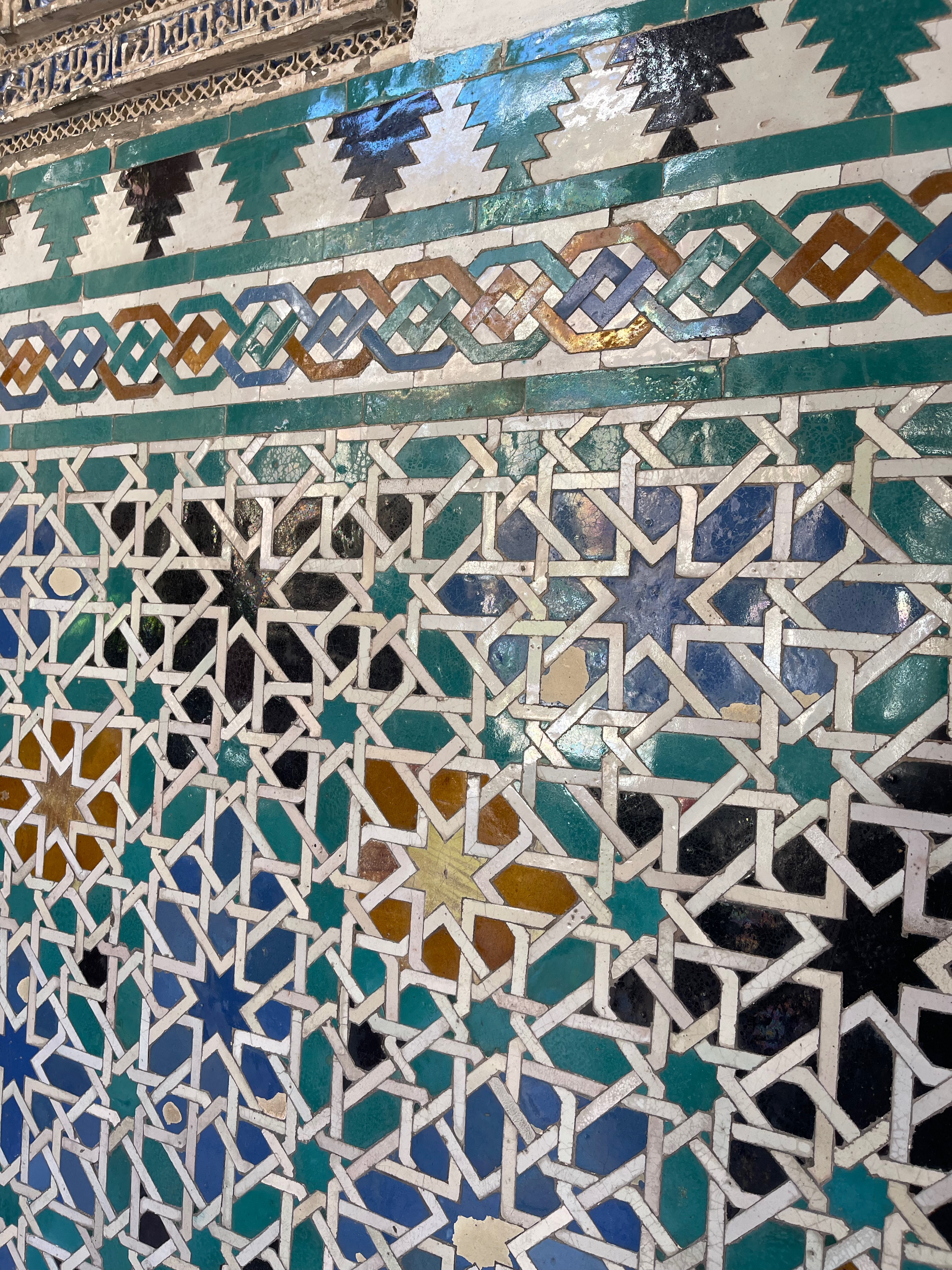
There are various buildings built in a semi-circle, with four bridges over a moat and a fountain in the middle. There are various tiled alcoves that represent the provinces of Spain. The use of decorated tiles was abundant, and it resulted in a very beautiful landmark.
You can visit Plaza de España and Maria Luisa Park on a horse-Drawn carriage ride through Seville that includes the plaza and the park, HERE or on a City Tour on a private Tuk Tuk that covers all the main sights in Seville. This can be booked HERE.


We strolled all over the plaza and when we thought we had seen everything, we caught another taxi to take us to “Arquivos da India” (Arquives of India) where we would meet our guide for the tour of the “Alcazar “and the “Cathedral”.

The tour started with the visit to the “Alcazar”, real name “Real Alcázar de Sevilla”.
You can book the same tour we did of the Alcazar, the Cathedral and the Giralda Tower HERE or HERE, both tours with skip the line priority.

The Alcazar (which means fortified castle in English) is a complex of beautiful palace buildings that had been built on the site of a fortress from the 10th century.

The current Alcazar is from the 14th century and built for King Peter of Castile in a “Mudejar” architectural style. All buildings are spectacular with intricate details to appreciate, making it a fascinating place to explore.

The visit starts by crossing the “Lion Gate” or “Puerta del León” and entering the Palace of King Don Pedro. It progresses by visiting other areas of the complex such as: “The Chapel of the Gothic Palace”, “Salon de los Embajadores”, and “Patio de las Doncellas”. Each of these places are unique and simply beautiful.


The visit ends with a half an hour break for the toilet and some exploration of the Royal Palace Gardens.
The Gardens are lush and magnificent and deserves a good 2 hours at least to be explored. However, we had to meet the group for the next visit that was going to be the Cathedral, just next door, and our visit to the gardens was a bit rushed.


Once everybody was gathered, we proceeded to the Cathedral. The complete name is “Catedral de Santa Maria de la Sede de Seville” in short “Seville Cathedral”.
It is a Catholic Cathedral and has been a UNESCO World Heritage Site together with the Alcazar since 1987.

The Cathedral started as a mosque in the 12th century under Moorish rule. When Christians recovered the power in the 13th century the Spanish King converted the mosque into a church, and it received substantial additions and extensions.
The mosque features were maintained and remains in the Cathedral to this date.

It was completed in the 16th century and today is the largest gothic cathedral in the world. It is the place of rest of many important history figures and royalty, with the most important and famous one being Christopher Columbus.
The Cathedral consists of a huge nave, various chapels, tombs, a tower, and a beautiful courtyard full of orange trees. The Cathedral is very beautiful but the most interesting thing to see, in my opinion, is the tomb of Christopher Columbus.

It is a very well elaborated tomb with four male figures representing the four kingdoms of Spain (Castile, León, Aragón, and Navarre) holding Columbus’ coffin in the air.
Columbus fell out with the Spanish Monarchy at the time and said he didn’t wish to be buried in Spanish soil. So, his wishes were respected, as he is not in the soil, but in the air!
There are rumours that his remains are not in Seville, but in Santo Domingo in the Republic Dominican, but a recent DNA test confirmed that he is likely to be the one in Seville.

Once we finished inside the Cathedral our tour guide left us to explore the outside, the orange courtyard and the Giralda Tower by ourselves. The tour was quite useful. The guide explained things in detail and gave us an unvaluable insight into the history of the Palaces and the Cathedral.
I recommend a tour, especially if you don’t have much time in the city.
You can book the same tour we did of the Alcazar, the Cathedral and the Giralda Tower HERE or HERE, both tours with skip the line priority.
If you arrive at the Alcazar and didn’t book any tickets in advance or tours and there is a big line waiting to buy the tickets, you can try to skip the line by buying the ticket to the Alcazar on line HERE and to the Cathedral HERE, you might be lucky and enter before everybody else in the queue!

The Giralda Tower is part of the Cathedral complex. It was built from the minaret of the original mosque on the site. Unusually, there are no steps to climb to get to the top, there are 34 gentle ramps.
As the tower evolved from a mosque, the story says that because the Iman had to be at the top of the tower five times a day, to make things easier, they built the access as ramps, so they could use donkeys to take the religious people to the top.

The ramps make the climb relatively easier and there are various points where you can stop to take your breath and to admire the city from the windows.
Once you get to the top, you can see the impressive bells and you are rewarded by the wonderful views of Seville and its colourful buildings.
After spending some time admiring the views, we made our way back down the ramps.


It was lunch time and we decided to have lunch in one of the restaurants near the cathedral. We sat on a table outside and ordered some cold sangrias and the famous local dish of “Salmorejo”, which is a traditional soup recipe from Andalusia.
It was very nice, and we took the opportunity to rest and just do nothing other than people watching for a while.
During lunch, we had a group of musicians come to our table to serenate us and others on other tables. In the end if you want, you can give them some Euros to help. Have a look at the video below:
You can experience Seville Tapas and bar culture by taking a Food tour where while tasting a variety of traditional tapas and wines you will also learn some of Seville’s history and get to know the city better. You can book the food tour HERE.

With lunch over and after feeling recovered we headed to “Casa de Pilatos”, as we still had time to visit another attraction in the afternoon. We walked there through the maze of streets of the old town and soon arrived, as it is not very far from the Cathedral.

“Casa de Pilatos” is another beautiful palace of Seville and one of the finest examples of Andalusian architecture of the 16th century. It is still the permanent residence of the Duke of Medinaceli.

The courtyard has a collection of statues from Rome and Greece of the 5th century.

The Praetorian Hall walls are covered with 150 different types of Cuenca tile designs from the 16th century. This room is just amazing!

The small and large gardens are also a delight to explore in this gorgeous palace.

A visit to “Casa de Pilatos” is a must if you have time in Seville and it is almost always missed by tourists visiting the city. We truly enjoyed our visit and would visit again when returning to Seville.
You can book a tour that includes El Salvador Church, Casa de Pilatos and ends at the Metropol Parasol HERE.
If you prefer to book only the entrance ticket in advance you can book it HERE.

When we returned to our hotel, we still had some time for browsing and doing some shopping at “El Corte Inglés” (just opposite our hotel).
In the evening we had a flamenco show booked at “Tablao El Arenal”. We booked a package of show and dinner at 8 pm. We took a taxi to go to the show, it was very easy as there was a taxi point just in front of the hotel.
If you want to book a flamenco show at “Tablao El Arenal” with drink and optional dinner or tapas, you can book it HERE.

We had a nice time at the flamenco show, but I was a bit disappointed as I was expecting that the show was going to be more flamenco music and this show was more concentrated on the flamenco dancing.
The dancing artist was excellent, and we could see the talent on his performance, but the music was not as good. We have seen flamenco shows in Madrid that had wonderful flamenco music and way better than this one.

The food started well with the starters, but the mains fell a bit below the standards to our taste as well. Dessert was good and the wine, as always, was divine. I think a better option is to have dinner before or after the show somewhere else.

And that was the end of our visit to Seville. We would certainly return in future as we had a very good impression of the town and felt we could spend some more time on this beautiful city.

Next day we were going to leave to our next destination: Córdoba
I hope this post helps you to plan your own itinerary and gives you an idea of what can be fitted in one day in Seville.
HOW TO MAKE THE MOST OF YOUR TRIP
Below you will find a list of what to visit, where to stay and where to eat in Seville. I classified each place as follows:
BOLD – Visited, tried and recommended
NOT BOLD – Not visited or tried, but planning to visit or try and heard very good reviews
RED – Visited and tried but do not recommend, avoid or be cautious
*** – Excellent
** – Good
* – OK
£££ – Expensive
££ – Fair and affordable
£ – Cheap
THINGS TO DO
ATTRACTIONS
1 – Plaza de España – ***
2 – Alcazar de Seville – ***
3 – Cathedral of Seville – ***
4 – Casa de Pilatos – ***
5 – Palacio de Las Dueñas – ***
6 – Metropol Parasol
7 – A flamenco show – ***
WHERE TO STAY
HOTELS
1 – Hotel Derby Sevilla – 3* – ££ – **
2 – Hotel Alfonso XIII – 5* – £££
3 – Hotel Casa Palacio Dom Ramón – 5* – £££
4 – Hotel Mercer Sevilla – 5* – £££
5 – Hotel Legado Alcazar – 4* – £££
6 – Itaca Sevilla by Soho Boutique – 3* – ££
If you prefer to book your own accommodation just search and book via the widget below:
WHERE TO EAT
RESTAURANTS
1 – El Riconcillo – * – ££
2 – Tablao El Arenal – ** – £££
3 – Los Rincones Del Marqués – £££
4 – Restaurante Recoveco – ££
5 – Bodega Palo Santo – ££
6 – El Cairo – ££
If you tried any of my recommendations above, please send me a message and tell me about your experience good or bad, so I can update the list accordingly. Thanks!
If you enjoyed reading this post you might also like to read:
1 – Experiencing Gibraltar -Day 1
2 – Experiencing Gibraltar – Day 2
3 – Cádiz, The Jewel of Andalusia, Spain – How to spend Day 1
4 – Cádiz, The Jewel of Andalusia, Spain – How to spend Day 2
5 – How to Explore Jerez de la Frontera and Seville – Day 1
6 – Seville – Day 2
7 – Córdoba
8 – Granada – Day 1
9 – Granada – Day 2
10 – Setenil de las Bodegas and Ronda
11 – Marbella
12 – Gibraltar – Day 3

Leave a Reply