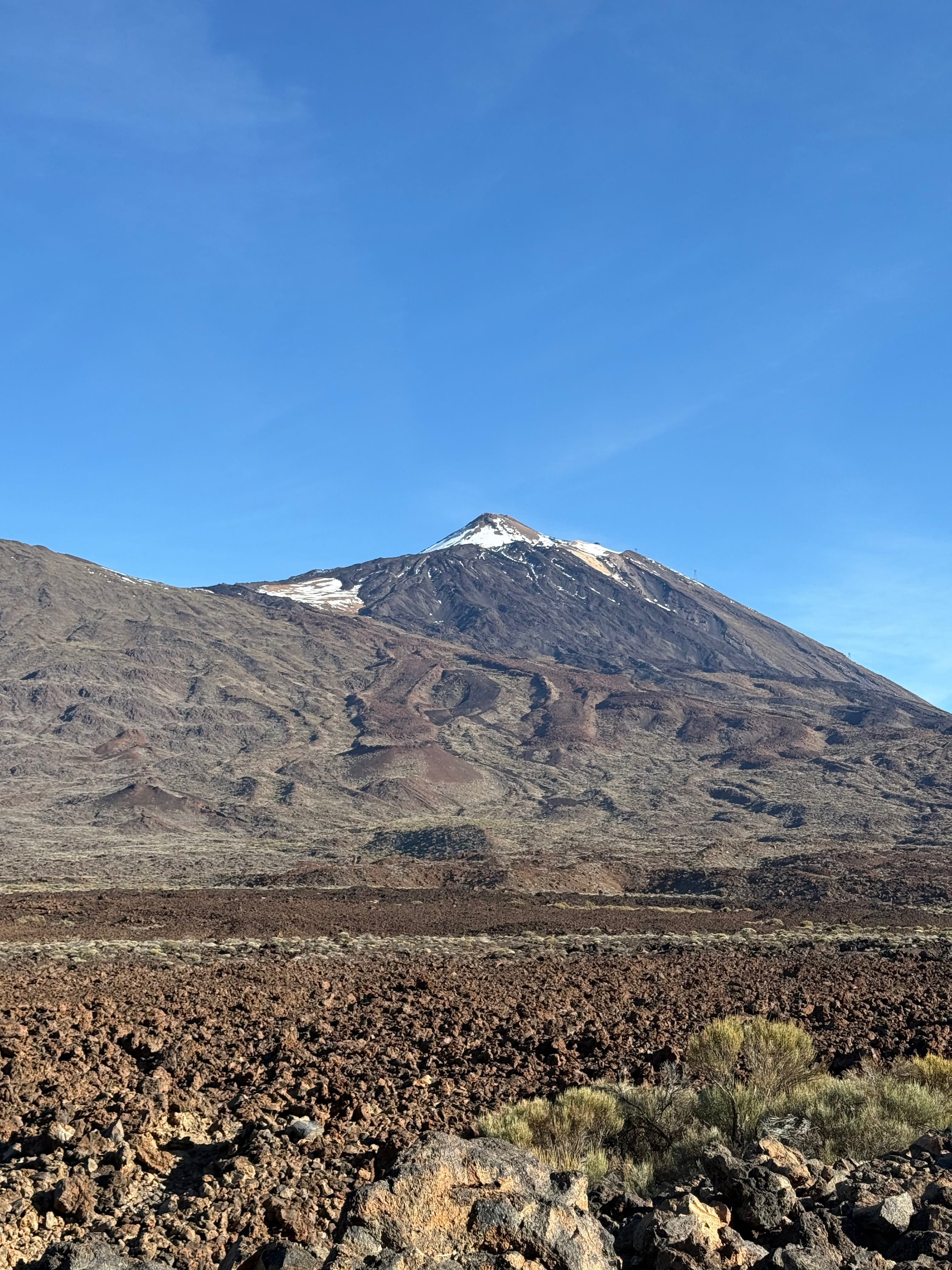

Welcome to our Tenerife Day 4! Today, we traded our city walking shoes for something sturdier as we set our sights on the crown jewel of the island: Teide National Park.

If you are just joining the adventure, we landed in Tenerife three days ago. On Day 2, we braved the winding roads to Masca, Garachico, and Icod de los Vinos, followed by our epic “speed-dating” tour of Santa Cruz de Tenerife and San Cristóbal de La Laguna on Day 3.
If you missed those action-packed updates, you can catch up on all the details in our previous posts right here on The Travelling Surveyor.
Don’t forget to subscribe (it’s free) to the blog! That way, you will never miss a single update from our Tenerife Road trip or our future travel adventures around the globe.
Hitting the Road to Santa Cruz de Tenerife
As you know, we love the ultimate freedom of exploring at our own pace. For this trip, we travelled independently using a rental car booked through Discover Cars, which made navigating the island incredibly easy.
However, if your idea of a relaxing holiday does not involve white-knuckle driving on steep volcanic switchbacks, you can leave the logistics to the pros. You can easily book a fully organised excursion through TourRadar. They offer fantastic itineraries tailored to fit every budget and travel style.
Feel free to browse their incredible trips through my exclusive links. Even better, you can score a sweet discount at checkout by using my special promo code RoseG50 on your next adventure!
Below is a map showing the places we visited on that day:
Without further ado, let’s dive straight into the drama of Day 4.

The Morning Launch: High Hopes and 10 AM Tickets
Our morning began flawlessly. We had tickets safely secured for the Teide Cable Car (Teleférico) for precisely 10:00 AM.

After a leisurely breakfast at our lovely flat and a few moments of peaceful sea-gazing from the window, we officially hit the road, pointing our bumper toward Teide National Park.
The drive took about an hour, and the transition in landscape was nothing short of cinematic. The moment we crossed the boundary into the National Park, we were completely mesmerised by the striking, alien-like terrain. It felt less like driving up a mountain and more like navigating the surface of Mars.

The Best Laid Schemes of Mice and Surveyor 😀
Before the trip, I had done my homework. I read that the cable car frequently shuts down at this time of year due to ferocious high-altitude winds. However, as we stepped out of the car, the air felt perfectly calm. We smugly assumed that luck was on our side and that we wouldn’t be affected by the weather gods.

Spoiler alert: We were entirely wrong.
When we arrived at the base station, the cable car was completely grounded. A massive crowd of disappointed travellers, all holding perfectly valid tickets, just like us, were wandering around looking lost.
As it turns out, the wind was throwing an absolute tantrum at the very summit, even if it felt like a gentle breeze at the bottom.

The staff told us a full refund for our tickets would be issued to our card, since they couldn’t guarantee whether or when the wind would stop its summit-level strike.
To console ourselves, we ducked into the base station café for a quick drink, made a strategic pitstop at the facilities, and drove away to find Plan B.
Before I reveal how we salvaged the rest of our day, let’s take a quick look at the fascinating science and history behind Teide National Park and Mount Teide itself.

Pro Tip: How to Outsmart the Teide Weather Gods
Don’t repeat our mistake! To avoid driving an hour into the mountains only to be greeted by grounded cabins, you need to check the live status before you leave your hotel.

There are several ways to check whether the Teide Cable Car is operating, and the best method is to visit the official Volcano Teide Live Status Page. Their “Teide Today” system updates continuously to let you know exactly if the facilities are open, what the temperature is at the upper station, and if the access roads are safe.
Alternatively, you can follow their official Facebook or X profiles. They swiftly post updates if operations stop due to weather conditions. If you book online, make sure to provide a valid mobile number to receive their free real-time SMS alerts if the mountain decides to throw a morning tantrum.

A Little Bit About Teide: Spain’s Highest Drama Queen
Now that you know how to avoid getting stranded at the base station, let’s dig into what makes this place so legendary. Teide National Park is not just a nice park with a big hill; it is a sprawling, dramatic wonderland that holds a staggering number of records.

- The Ultimate High Point
At a jaw-dropping 3,718 meters above sea level, the summit of Mount Teide is the highest peak in Spain. “Inscribed in 2007 under the Natural Asset category, Teide National Park is… an exceptional example of a relatively old, slow-moving, geologically complex and mature volcanic system,” according to the UNESCO World Heritage Centre. If you measure it from the ocean floor, it actually stands as the third tallest volcanic structure on Earth.
- An Active Sleeping Giant
Make no mistake, Teide is still an active volcano. While its last major eruption occurred back in 1909 along the nearby Chinyero vent, the main crater still lets out occasional puffs of sulphurous steam just to remind everyone who is boss.
- Hollywood’s Favourite Backdrop
Because the landscape is a surreal mix of chaotic lava fields, jagged rock formations, and multi-coloured volcanic sand, it looks completely out of this world. Directors love it here; the park has doubled as a prehistoric or alien wilderness in blockbuster movies like Clash of the Titans, Star Wars, and Planet of the Apes.

- A Sacred Indigenous Space
Long before Spanish conquistadors arrived, the island’s indigenous people, the Guanches, considered the volcano deeply sacred. They believed it was a portal to the underworld and the home of a terrifying, fire-breathing demon named Guayota. Looking at the eerie, scorched landscape, it is remarkably easy to see why they thought someone angry lived at the top!
- Peak Elevation: 3,718 meters above sea level.
- Volcanic Status: Active giant, last erupted in 1909.
- Global Accolade: Proud UNESCO World Heritage Site since 2007
Pivoting to Plan B: Scenic Drives and Mountain Villages
Since the cable car was staging a weather-induced strike and keeping us firmly grounded, we did what any resilient road-trippers would do: we hopped back into the car and went for a cruise. We spent the next hour driving around the park, completely mesmerised by the volcanic landscapes, pulling over at every scenic viewpoint to snap some incredible photos.
Discover the beauty of Teide National Park on an exciting sunset buggy tour through Tenerife’s most spectacular landscapes. Book this tour HERE.
Another exciting experience is to watch the sunset at Teide National Park and stargazing tour. You can observe the planets and stars through powerful telescopes at the best stargazing locations. Book this one HERE.

Our original itinerary included lunch at “Finca Tres Roques” in Vilaflor right after the volcano tour. However, because our cable car cancellation put us way ahead of schedule, it was far too early to eat. We decided to skip the restaurant but still drive down to Vilaflor to explore the area.

It turned out to be a spectacular choice. Vilaflor is a gorgeous, quaint, and completely charming traditional Spanish village. We snagged a parking spot right on the main road and spent a lovely time wandering around the historic centre, admiring the classic architecture and beautifully preserved houses.
Exploring Vilaflor: Spain’s Highest (And Most Charming) Mountain Outpost
1. Life in the Clouds (Literally)
Perched at a dizzying 1,400 meters above sea level on the south-facing slopes of Mount Teide, Vilaflor holds the crown as the highest municipality in Tenerife, and one of the highest villages in all of Spain. Because of its extreme altitude, it serves as a literal gateway to the clouds, surrounded by dense, fragrant Canarian pine forests and vast terraced vineyards.

2. A Tale of Flowery Romance
The name “Vilaflor” (Officially Vilaflor de Chasna) literally translates to “Town of Flower,” and local legend says it comes from a dramatic 16th-century love story. A wealthy Spanish captain named Pedro de Chasna allegedly spotted a strikingly beautiful indigenous Guanche girl walking through the forest. Overwhelmed by her beauty, he reportedly exclaimed, “Vi la flor de Chasna!” (“I saw the flower of Chasna!”). The romantic name stuck, and the town centre still lives up to it today, bursting with vibrant flora and blossoms.

3. A Masterclass in Traditional Architecture
Wandering through the quiet, pedestrianized streets feels like walking through an open-air museum. The town has beautifully preserved its traditional 17th- and 18th-century stone houses, complete with whitewashed walls, heavy wooden window frames, and cobblestone pathways. The focal point of the town is the beautiful Plaza de San Pedro, home to the historic Church of San Pedro Apóstol (built in 1550) and a gorgeous, ancient marble fountain.

4. Home to a Real-Life Saint
Vilaflor is fiercely proud to be the birthplace of “Santo Hermano Pedro” (Saint Peter of Saint Joseph Betancur). Born here in 1626, he later traveled to Guatemala as a missionary, where he dedicated his life to helping the poor and founded the Order of Bethlehemite Brothers. He was officially canonised by Pope John Paul II in 2002, making him the Canary Islands’ first-ever locally born saint. You will spot statues, monuments, and his ancestral home dedicated to his legacy all over the village.


Before hitting the road again, we made a pitstop at Café Vilaflor for a quick shot of caffeine. The food coming out of their kitchen looked absolutely brilliant, but since our stomachs still weren’t fully on board for lunch, we decided to push on and look for food later down the coast.
You can book a half-day tour, visiting Vilaflor, Wine tasting and an Aloe Vera Plantation while passing through dramatic landscapes. Book this tour HERE.
Finding a Hidden Gem: El Puortito and the Seaside Chiringuito
We pointed our rental car back toward “Playa Paraíso”, but decided to make a detour to a tiny coastal spot called “El Puortito” (which translates to “Little Port”) after hearing rumours of a fantastic local “Chiringuito” (beach bar) hidden away there.

For those unfamiliar with Spanish beach culture, a “chiringuito” is essentially the holy grail of coastal dining. It is a casual, open-air beach bar or restaurant that sits directly on or right next to the sand. They range from humble, rustic shacks to trendy pavilions, but they all share the same mission: serving up cold drinks, fresh seafood, and ultimate laid-back holiday vibes with a front-row view of the ocean
I will be entirely honest with you: the approach to “El Puortito” is not going to win any beauty pageants. The area is currently undergoing a massive redevelopment, meaning the drive takes you past plenty of demolition sites, rubble, and derelict buildings. But don’t let that scare you off! The moment you actually arrive at the water, the scenery shifts completely.

You are greeted by a lovely, picturesque little beach and a fantastic seaside promenade where we walked all the way to the very edge.

Right at the entrance to the beach, on the corner sits the prized “Chiringuito”.

We managed to score an outdoor table, ordered a spread of local food and cold drinks, and let the relaxation take over.


The weather was a dream, warm and beautifully sunny without feeling like an oven. We spent a glorious two hours eating fresh food, staring at the Atlantic Ocean, and happily people-watching before finally heading back to our flat in Playa Paraíso.

Total Relaxation and a Conveyor Belt Finale
Once we were back at the flat, I decided it was time for some ultimate holiday pampering. I booked myself in for a massage and reflexology session at the wellness parlour located right beneath our apartment building. It was absolutely heavenly, and I walked out feeling like a completely brand-new person.

For dinner, we opted for maximum convenience again and headed downstairs to try out a Japanese spot called Downtown Sushi. It’s one of those classic conveyor belt restaurants where the dishes glide past your table, you grab whatever catches your eye, and you tally up the coloured plates at the end to settle the bill.
The verdict? It was perfectly fine and hit the spot, though it didn’t quite live up to the high standards of our favourite Japanese restaurant back home in the UK. Still, the atmosphere was fun, the food was enjoyable, and the night finished on a wonderful high.
Coming Up Next: Island Hopping to La Gomera!
Day 5 is going to be an early one, and the anticipation is massive! We have booked an organised day-trip excursion to the neighbouring island of “La Gomera” through GetYourGuide.
Our morning pickup is scheduled for a bright and early 8:30 AM right by Los Cristianos beach, which means we are heading to bed early tonight to ensure we are well-rested for the voyage ahead and guarantee a place to park in Los Cristianos!
Make sure you don’t miss the next instalment, where I will take you across the water and tell you absolutely everything about our magical day exploring the wild landscapes of La Gomera!

HOW TO MAKE THE MOST OF YOUR VISIT TO TEIDE NATIONAL PARK
Below you will find a list of what to visit, where to stay and where to eat around Teide National Park. I classified each place as follows:
BOLD – Visited, tried and recommended
NOT BOLD – Not visited or tried, but planning to visit or try and heard very good reviews
RED – Visited and tried but do not recommend, avoid or be cautious
*** – Excellent
** – Good
* – OK
£££ – Expensive
££ – Fair and affordable
PLEASE NOTE: Every hotel, restaurants and attractions I mention on my blogs are not sponsored reviews and we always paid the full price when visiting. We give our own opinion of the place and detail our experience, good or bad.
THINGS TO DO
ATTRACTIONS
1 – Teide National Park and the Cable Car
2 – Explore the National Park and its striking landscapes – ***
3 – Visit Vilaflor – ***
4 – El Puertito – ***
WHERE TO STAY
ACCOMMODATION
1 – Parador de La Cañadas de Teide – 3* – **
The above hotel is the only one inside the Teide National Park, but you can stay anywhere in the island and be within a short distance from the park.
2 – Hotel Spa Villalba – 4* – £££
3 – Hotel El Tejar & Spa – Vilaflor – 2* – ££
4 – The Lemon Tree – Vilaflor – 4* – ££
5 – Hotel Alta Montaña – Vilaflor – 3* – ££
6 – Karat El Nogal – Escalona, Vilaflor – Escalona, Vilaflor – 4* – ££
If you prefer to look for your own accommodation, search and book via the below widget:
I use affiliate links such as the links above for Booking.com, Get your Guide, Viator and others. It means that if you use any of my links to make a booking, I will get a small commission from the partners I’m affiliated with without any additional cost to you. Please, use the links provided when making a booking, this is a way of supporting blogs like this so we can continue writing informative and interesting posts. I’m very thankful for that.
BEST PLACES TO EAT
RESTAURANTS
1 – Restaurant Finca Tres Roques – Vilaflor – ££
2 – Restaurante Parador de Las Cañadas – Teide National Park – ££
3 – Los Cipreses de La Casa Inglesa – Vilaflor – £
4 – Restaurante Tasca La Cantera – Granadilla de Abona – ££
5 – Pausa Café Vilaflor – Vilaflor – £ – ***
6 – Chiringuito El Puortito – El Puertito – ££ – *** – (We ate here)
We only tried the ones in bold , the others are the result of my researches and ones that I would like to try. If you tried any of my recommendations above, please send me a message and tell me about your experience good or bad, so I can update the list accordingly. Thanks!
If you enjoyed reading this post you might also like to read:

Leave a Reply