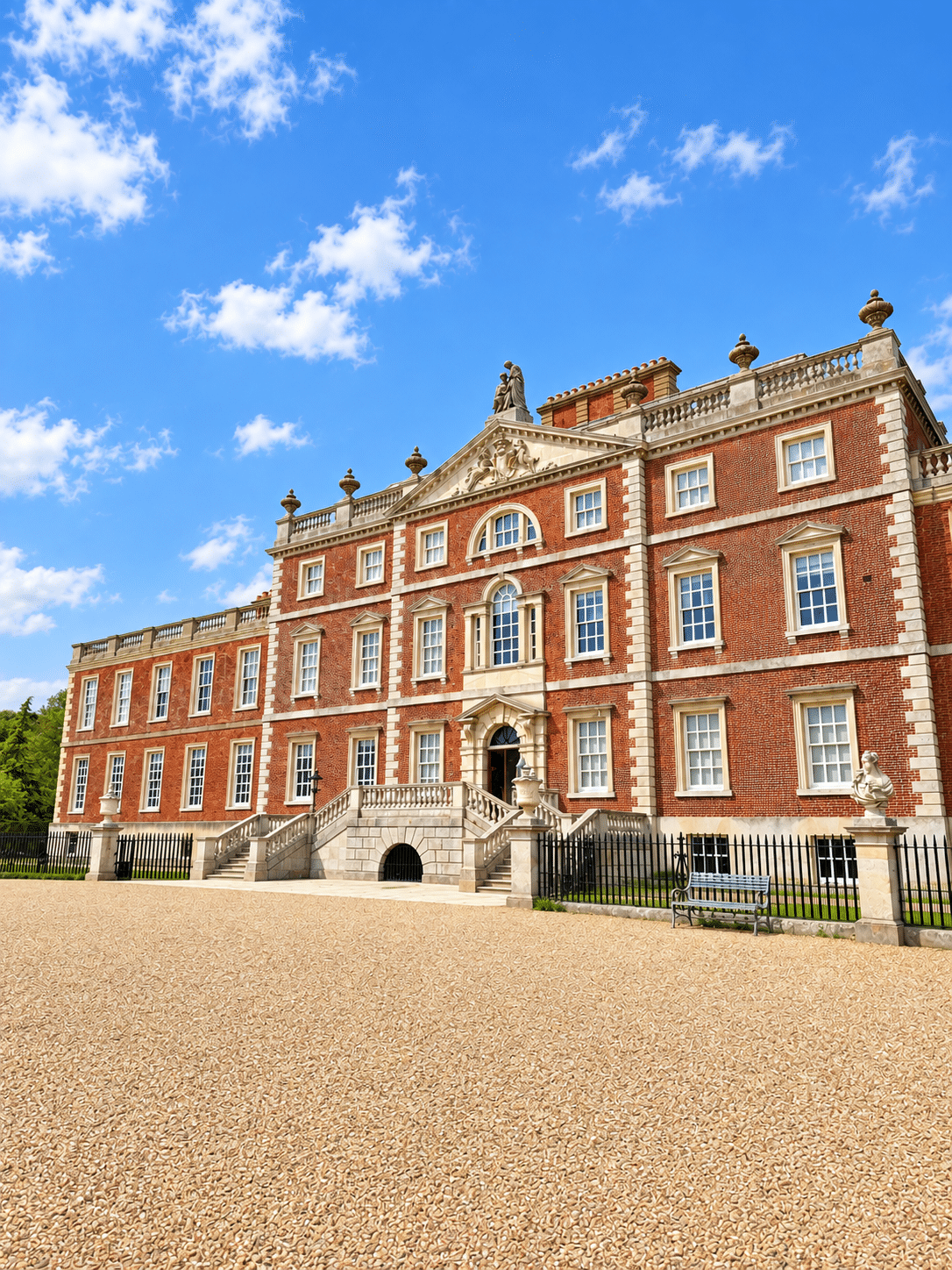

When friends from London came down for the weekend, we planned a Sunday trip to Wimpole Estate, a beautiful National Trust property located near Royston in Cambridgeshire.
Because we are all National Trust members, exploring these historic sites together has become a favourite tradition. Over the years, we’ve crossed several excellent properties off our list, including Houghton Mill, Anglesey Abbey, and Ham House.
A day out at a National Trust property is always a reliable recipe for a great weekend. For our friends with young children, the dedicated play areas are a massive highlight and a great way for them to burn off some energy.
The setup is incredibly flexible, too; you can easily spend the whole day exploring, stopping for lunch at the on-site cafés, or setting up a picnic on the grounds.

If there is one downside, it’s that many of these historic properties have strict no-dog policies, even in the gardens. As dog owners ourselves, it’s always a bit of a shame to leave our pets behind, but the quality of the day out makes it well worth the trip.
With that in mind, Wimpole Estate was our destination of choice this time. Here is a little bit more about this spectacular property.
A LITTLE BIT ABOUT WIMPOLE ESTATE
A Look into Wimpole’s History
While the grand neoclassical mansion you see today was built in the 1640s by politician Sir Thomas Chicheley, the land itself has been continuously occupied for over 2,000 years. It even earned a mention in the Domesday Book of 1086.

Over the centuries, the estate changed hands frequently—often because its aristocratic owners ran out of money due to gambling or overspending on lavish renovations.
Because so many different families lived there, some of history’s greatest architects and landscape designers were brought in to leave their mark. The sprawling parkland was shaped by legendary landscapers like Capability Brown and Humphry Repton, making it one of the most architecturally significant estates in the region.

Fascinating Facts About the Estate
- The Jungle Book Connection: Wimpole’s very last private owner was Elsie Bambridge, the daughter of famed author Rudyard Kipling. When she and her husband bought the estate in the 1930s, it didn’t even have electricity or running water. She used her father’s book royalties to meticulously restore the property to its former glory before bequeathing it to the National Trust upon her death in 1976.
- A Petty Picnic Revenge: Speaking of Elsie Bambridge, she was notoriously protective of her privacy. Local lore says she grew so irritated by members of the public picnicking too close to her home that she tracked down one offending couple, travelled to their house, and staged her own retaliatory picnic right on their front lawn.
- The Majestic Yellow Drawing Room: Inside the hall sits the spectacular Yellow Drawing Room, designed in the 1790s by Sir John Soane. To build this soaring, concert-sized room, the architect actually had to destroy seven pre-existing ground and first-floor rooms to clear the space.

- Royal Approval: The estate has hosted its fair share of high-profile guests, most notably Queen Victoria and Prince Albert, who stayed for a grand two-day visit in October 1843. The royal couple attended a massive ball here alongside 800 other guests.
- A Working, Sustainable Marvel: Today, Wimpole’s Home Farm is the only fully “in-hand” working farm managed directly by the National Trust. It functions as an award-winning model for sustainable agriculture and is home to rare-breed livestock, including Shire horses, rare sheep, and goats
VISITING WIMPOLE ESTATE
When we first arrived at the estate, my friend’s husband immediately took the children over to explore the outdoor playground, allowing us the perfect opportunity to head straight to the main house.

It is an incredibly vast and imposing structure, yet absolutely spectacular to look at and filled to the brim with fascinating historical treasures. We spent a wonderful couple of hours wandering through, deeply admiring the grand, ostentatious rooms, the traditional historic kitchen, and the masterful period architecture.


Once we finished touring the interior, we reconnected with my friend’s husband so he could take his turn exploring the house. Meanwhile, the rest of us took the kids over to the charming little community farm that they keep right on the estate grounds.

The farm turned out to be a massive hit, boasting a wonderful variety of residents. The children were completely enchanted, spending ages watching the playful piglets, the energetic goats, the sheep, and the majestic horses. They also had a fantastic time spotting the chickens, ducks, fluffy rabbits, and friendly donkeys.


As soon as her husband returned from his tour, our entire group headed over to the estate’s café to rest our feet. We ordered a delicious spread of fresh sandwiches and drinks, enjoying a wonderfully relaxing, late lunch together.

It truly was a brilliant day out spent in the company of great friends and their lovely kids, all set against the backdrop of an absolutely beautiful property. We enjoyed ourselves so much that we are already actively planning our next weekend excursion to the Ickworth Estate in Suffolk, which sits just right next door to Cambridgeshire.

We are already looking forward to it and can’t wait for what promises to be another memorable day!
I hope this post will give you some idea of what can be done in a day in Wympole Estate and will help you plan your own visit there.
HOW TO MAKE THE MOST OF YOUR VISIT TO WIMPOLE ESTATE
Below you will find a list of what to visit, where to stay and where to eat around Wimpole Estate. I classified each place as follows:
BOLD – Visited, tried and recommended
NOT BOLD – Not visited or tried, but planning to visit or try and heard very good reviews
RED – Visited and tried but do not recommend, avoid or be cautious
*** – Excellent
** – Good
* – OK
£££ – Expensive
££ – Fair and affordable
£ – Cheap
PLEASE NOTE: Every hotel, restaurants and attractions I mention on my blogs are not sponsored reviews and we always paid the full price when visiting. We give our own opinion of the place and detail our experience, good or bad.
THINGS TO DO
1 – Visit the House – ***
2 – Visit the Farm – ***
3 – Explore the Gardens
WHERE TO STAY
ACCOMMODATION
1 – Pretty Farm Cottage – 3* – £
2 – Finest Retreats – 3* – £
3 – The Old Smithy – 4* – ££
4 – The Chalk Hare – 4* – ££
5 – The Coach House – £
6 – Longstowe Farmhouse – £
If you prefer to look for your own accommodation, search and book via the below widget:
I use affiliate links such as the links above for Booking.com, Get your Guide, Viator and others. It means that if you use any of my links to make a booking, I will get a small commission from the partners I’m affiliated with without any additional cost to you. Please, use the links provided when making a booking, this is a way of supporting blogs like this so we can continue writing informative and interesting posts. I’m very thankful for that.
BEST PLACES TO EAT
RESTAURANTS
1 – The three Horseshoes – ££
2 – The Red Cow – ££
3 – Provenance – ££
4 – The Cricketers – ££ *** (Jamie Oliver’s parent’s pub – We ate here in another occasion)
5 – Fox & Hounds – ££
6 – MITR – ££
We only tried the ones in bold , the others are the result of my researches and ones that I would like to try. If you tried any of my recommendations above, please send me a message and tell me about your experience good or bad, so I can update the list accordingly. Thanks!
If you enjoyed reading this post you might also like to read:



Leave a Reply