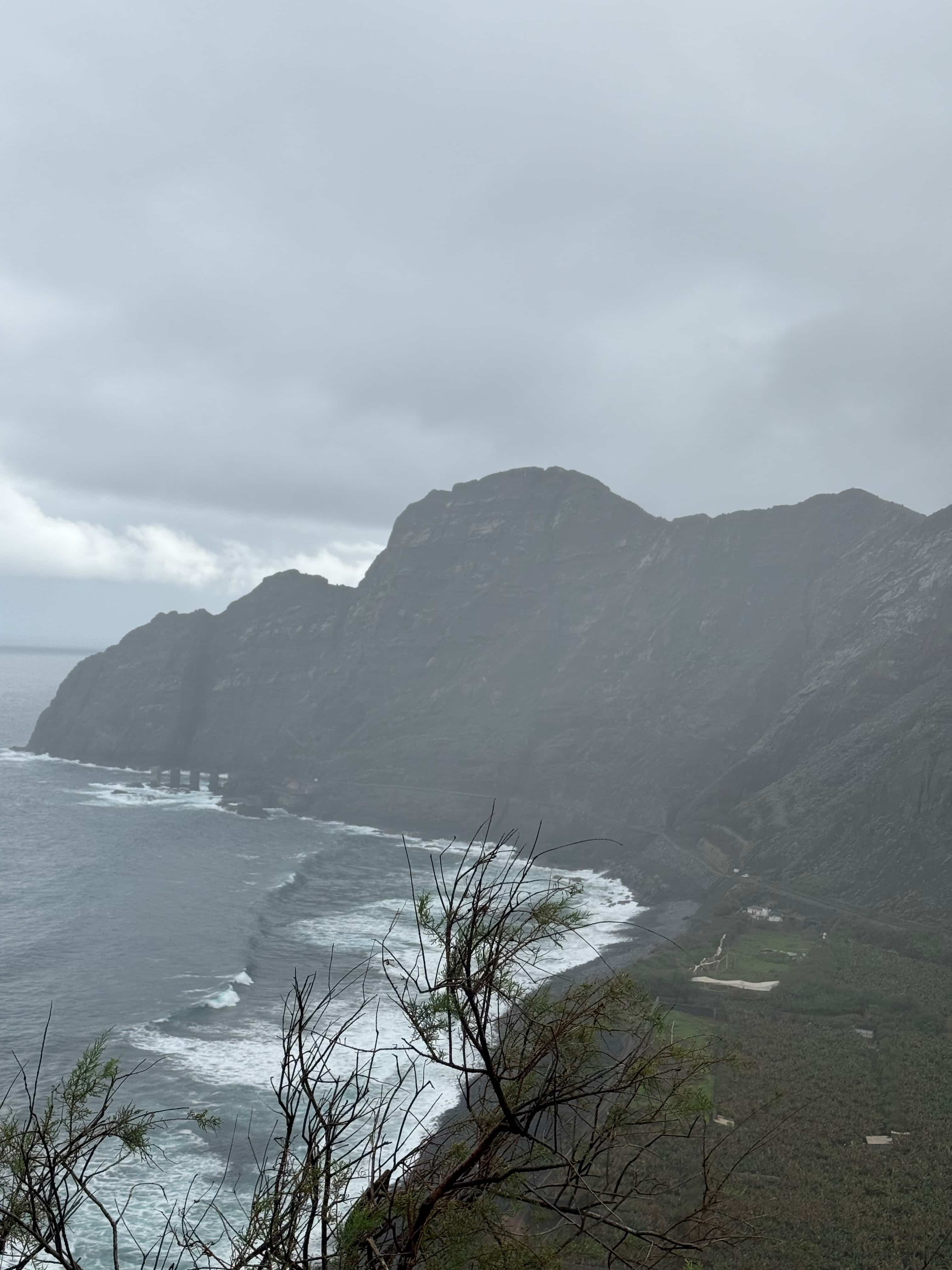

Welcome to Day 5 of our Tenerife adventure! If you are just joining the road trip, we have been on a serious mission and this time is “La Gomera”!
On Day 2, we tackled the hairpin turns of Masca, Garachico, and Icod de los Vinos. Day 3 was a whirlwind urban double-date with Santa Cruz de Tenerife and San Cristóbal de La Laguna. Yesterday, on Day 4, we visited the Teide National Park, explored Vilaflor, and tracked down a hidden seaside “chiringuito” in El Puertito.
Don’t forget to subscribe (it’s free) to the blog! That way, you will never miss a single update from our Tenerife Road trip or our future travel adventures around the globe.
Today, we are officially leaving Tenerife behind. Temporarily, at least, to explore La Gomera, a neighbouring gem in the Canary Islands archipelago. It is located just a one-hour ferry ride from Los Cristianos beach.

To keep things completely stress-free, we outsourced the logistics and booked an all-inclusive day tour via GetYourGuide. The package neatly wrapped up our round-trip ferry tickets, lunch, island transport, and a dedicated local guide into one tidy itinerary.
The 7:30 AM Gamblers: Beating Los Cristianos Parking
Our morning started at an hour that felt highly illegal for a holiday. Because our tour group was scheduled to assemble on Los Cristianos beach at a sharp 8:30 AM, we had to plan with military precision.
The drive from our home base in Playa Paraíso to Los Cristianos takes a straightforward 20 minutes. However, anyone who has ever visited Los Cristianos knows that hunting for a public parking space is a psychological thriller. It can take either two minutes or a gruelling half an hour. It entirely depends on how much the parking gods smile upon you. Refusing to leave it to chance, we were out the door by 7:30 AM.

Lady Luck was firmly on our side. We snagged a brilliant parking spot remarkably close to the meeting point with time to spare, leaving us with nothing to do but sit back, sip our morning thoughts, and wait for our tour bus to roll up.
All Aboard: Ferries, Flocks, and Smooth Sailing to La Gomera
Right on schedule, our coach materialised. After playing musical chairs to pick up a few more travellers from various coastal hotels, we headed straight into the bustling port.
Our guide efficiently handed over our ferry tickets, instructed us to reconvene once we touched down on La Gomera, and pointed us toward the correct bus parking lot on the other side.
We joined the eager crowd waiting at the terminal until the boarding call echoed through the lounge. This wasn’t a tiny shuttle boat. It was a massive, multi-deck vessel swallowing up cars, coaches, and hundreds of passengers.

The ferry was absolutely packed to the brim with eager day-trippers, but the Atlantic Ocean decided to behave beautifully. The crossing was incredibly smooth, blissfully stable, and completely free of stomach-churning waves.

Before we knew it, we pulled into the port of La Gomera. We disembarked, and successfully tracked down our guide at the designated bus terminal. Once the final stragglers were counted and safely on board, our engines roared to life.

Before I reveal exactly what we discovered on this wild, rugged island, let’s take a quick look at the history, culture, and quirky secrets of La Gomera.
Welcome to La Gomera: The Canary Island That Time Forgot
Before we dive headfirst into our day-trip itinerary, let’s peel back the curtain on this incredible, rugged slice of paradise. If Tenerife is the bustling, energetic sibling of the Canary Islands, La Gomera is the quiet, mysterious introvert who prefers reading ancient history books by a misty campfire.

It is the second smallest of the main Canary Islands, home to just about 22,000 residents. Because it deliberately chose to reject the siren song of mega-resorts and mass tourism, walking off the ferry here feels like stepping straight into a time machine, or the set of a prehistoric movie.
The Geography of La Gomera: Nature’s Giant Fruit Juicer
Geologically speaking, La Gomera is an absolute marvel. It was formed by volcanic activity millions of years ago, but unlike Tenerife, its volcanoes have been blissfully extinct for aeons, allowing time and heavy weather to sculpt the land.
Locals often describe the island’s shape as a giant, upside-down fruit juicer. From a massive, heavily forested central peak, an intense network of steep, eroded ravines and dizzying vertical canyons (barrancos) radiate directly outward toward the ocean.

Because of this intense topography, the island plays host to severe microclimates. While the south coast basks in hot, arid sunshine, the high-altitude north and centre are perpetually draped in cool, thick, cinematic Atlantic mists.
A Quick History of La Gomera: Pirates, Conquistadors, and Columbus
Long before Spanish ships appeared on the horizon, La Gomera was inhabited by the “Guanches”. They were a resilient indigenous population of North African origin. They divided the island into four fiercely independent tribal kingdoms: “Mulagua”, “Hipalán”, “Orone”, and “Agana”. Unlike other islands that fell quickly, the Gomeran aborigines fought back with a legendary, rebellious spirit that made the island nearly impossible for European conquistadors to fully subdue.

The island also secured its permanent spot in global textbooks thanks to Christopher Columbus. In 1492, the port city of San Sebastián de La Gomera served as his absolute final stop. He gathered supplies and fresh water before he famously set sail across the unknown Atlantic to the New World.
The Culture of La Gomera: A Whistling Heritage & Palm Honey
La Gomera’s isolation and dramatic terrain forced its people to get creative. It resulted in some of the most fascinating cultural traditions on the planet:

- The Silbo Gomero: This is the crown jewel of Gomeran heritage. Because the island’s steep, gaping ravines made travelling to a neighbour’s house an hours-long hiking nightmare, the aborigines developed a fully functioning whistled language to communicate across distances of up to 5 kilometres! It translates standard Castilian Spanish into piercing, bird-like pitches. It is so highly protected that UNESCO designated Silbo Gomero as Intangible Cultural Heritage, and it is a strictly compulsory subject in local primary schools today.
- The Gastronomy: Gomeran cuisine relies heavily on the island’s fertile soil. You cannot leave without trying Almogrote, a rich, spicy hard-cheese paste blended with garlic, peppers, and olive oil. The island is also famous for “Miel de Palma” (Palm Honey). It is a delicious, sweet syrup tapped by hand from the sap of native palm trees, unique to La Gomera.
What to See and Do in La Gomera
- Garajonay National Park: Covering the misty crown of the island, this proud UNESCO World Heritage Site preserves a prehistoric laurel forest (laurisilva). It carpets the Mediterranean basin for millions of years. Moss-draped, twisted tree branches and low-hanging clouds give the entire hiking trail a mystical, fairy-tale atmosphere.

- Agulo: Celebrated as one of the absolute prettiest and most authentic colonial villages in all of Spain, this little gem features narrow cobblestone streets, colonial façades, and vibrant red volcanic soil.

- Mirador de Abrante: A thrilling viewpoint hanging over the cliffs of Agulo. It features a 7-meter long glass-bottomed skywalk that extends out into the open air, offering terrifyingly beautiful panoramic views of the valley and Tenerife’s Mount Teide floating across the water.
- Torre del Conde: Located right in San Sebastián, this historic 15th-century stone fortress is the oldest surviving military watchtower in the Canary Islands, built to protect the early Spanish settlement from pirate attacks and indigenous rebellions.

Fun Facts
- The Global Sweet Tooth Started Here
When Christopher Columbus left the shores of San Sebastián in 1492, he packed a very specific agricultural hitchhiker in his cargo: sugarcane plants sourced right from the valleys of La Gomera. He introduced them to the Caribbean, effectively kickstarting the massive global sugar industry in the Americas.
- The Pirate Ghost Coast
Because the island’s vertical sea cliffs created an impenetrable barrier, its deep hidden bays became legendary hideouts for ruthless European and North African pirates during the 16th and 17th centuries. They routinely ambushed Spanish gold fleets returning from the Americas.
- A Festival Every Five Years
If you love massive cultural parties, you have to time your visit carefully. The island’s most iconic festival, “La Bajada de la Virgen de Guadalupe”, only happens once every five years. The island’s patron saint is taken out of her sanctuary and paraded completely around the coast by a flotilla of colourful local boats

VISITING LA GOMERA
Scaling the Summit: Dams, Drizzle, and the “Island of Reservoirs”
As our tour bus pushed higher into the mountains, the temperature plummeted, and the sunny coast quickly became a distant memory. The air grew crisp, and we were greeted by a light, moody drizzle. Remarkably, this brief mountain shower turned out to be the one and only time it rained during our entire trip.
Our first official sightseeing stop took us to the edge of a viewpoint looking down over the impressive “Chejelipes Dam” (Embalse de Chejelipes). La Gomera doesn’t play around when it comes to water storage; it is proudly nicknamed the “Island of Reservoirs”. This specific dam is a massive engineering feat. It is capable of holding a staggering 630,000 cubic meters of water.

When you look at a map of La Gomera, the density of its water infrastructure is absolutely wild. Despite the island’s tiny footprint, there are an incredible 37 dams and 2 major reservoirs cleverly tucked into the riverbeds of the deep Gomeran ravines. They act as giant catch-basins, trapping vital rainwater to irrigate the island’s terraced crops. The views from that high vantage point were spectacular, giving us a true sense of just how vast, green, and rugged the island’s interior really is.
The Hermigua Viewpoint: The World’s Most Perfect Weather (Allegedly)
After soaking up the reservoir views, our bus rolled along to the Hermigua Viewpoint. While we didn’t have time to actually hike down into the village itself, looking down over the valley gave us a fantastic look at a place with a very lofty claim to fame.

As it turns out, Hermigua is widely celebrated as having the best climate in the entire world. Back at the turn of the 20th century, a highly serious committee of international meteorologists formally bestowed this title upon the valley.
At the time, wealthy Europeans were actively hunting for pristine, microclimate sanctuaries with exceptionally clean air to escape the various industrial diseases plaguing continental cities. Hermigua was deemed the ultimate natural health spa.

The secret to this architectural paradise lies entirely in the Atlantic trade winds. These constant breezes gift Hermigua an incredibly stable climate. It has mild temperatures, and a perfect blanket of humidity. This natural greenhouse effect feeds a jaw-dropping variety of lush vegetation.

Up there, winter temperatures rarely ever drop below 15°C, and summer temperatures rarely cross a beautifully comfortable 27°C. It’s essentially a real-life meteorological utopia.
The Tourist Lunch Machine (With a Spectacular Finale)
By the time our mountain exploration wrapped up, our stomachs were actively demanding a recess. The tour bus pulled up to our designated lunch spot. It turned out to be a massive, cavernous restaurant specifically engineered to handle the midday tourist rush.

We were definitely not the only group with this idea; the dining room was packed with several other tour groups sitting at long, banquet-style tables. It had the distinct, buzzing energy of a well-oiled cruise ship dining hall.

The menu was a structured, three-course affair. Everyone was served a warm bowl of traditional local soup to start, followed by a choice of fish, lamb, or a vegetarian option for the main course. Opting for the coastal classic, we ordered the fish. The verdict? It was perfectly okay, though the main course didn’t exactly blow us away. Luckily, they rounded out the meal with a dessert that was genuinely delicious and ended the food portion of the day on a high note.


But the real highlight of the afternoon wasn’t on the plate. Just as we were finishing our dessert, a local lady stepped up to the front of the room to give us a live demonstration of “Silbo Gomero”, the island’s legendary whistled language…
The Silbo Gomero: A Deafening Lesson in Lunch Etiquette
I’ll be entirely honest: before witnessing it in person, I assumed it would be a series of simple, melodic tweets, perhaps a polite way to signal “Pass the salt” across a dinner table.
I was spectacularly wrong.
As we sat there, the lady started to demonstrate the language. She took a deep breath, strategically jammed two fingers into her mouth, and unleashed a whistle that nearly launched me straight out of my chair. It was a piercing, ear-splitting sound wave that felt loud enough to shatter glass and confidently echo off a cliffside three valleys away.

What makes Silbo truly mind-blowing is that it isn’t a secret code; it is a fully functioning phonetic language. By altering the pitch and length of the whistle, locals can translate standard Castilian Spanish into high-frequency sound waves.
Historically, this was the ultimate low-tech lifehack. If an indigenous Gomeran living on top of a mountain needed to tell his cousin down in a deep ravine that a pirate ship was approaching, he didn’t lace up his hiking boots for a gruelling three-hour trek. He simply whistled the news across the canyon in four seconds flat.
It was the world’s very first high-speed broadband network, entirely powered by lung capacity.
Watching the demonstration carry out a full, fluent conversation consisting entirely of intense whistles was absolutely surreal. To the untrained ear, it sounds exactly like two highly caffeinated canaries having a heated political debate over a basket of bread rolls.
It was easily one of the most fascinating, unique, and slightly deafening cultural experiences of the entire trip, and it safely solidified my belief that my own casual whistling skills are woefully inadequate.

Moving On: Vallehermoso and the Giant Volcanic Tooth
With our ears still ringing from the whistle demonstration, we climbed back onto the bus to tackle the afternoon itinerary. Our next destination was “Vallehermoso” (Beautiful Valley), an area famous for hosting the best-preserved juniper groves in the entire Canary Islands archipelago.

Our guide pointed out the trees, explaining that juniper wood is highly prized for its solid density and beautiful blonde colour, making it a hot commodity for high-quality furniture and traditional utensils over the centuries.

After pulling over to appreciate the stunning valley vistas and snap a few photos, we cruised past “Roque Cano”. This striking landmark is a massive, vertical “phonolite dike”, which is a fancy geological term for a volcanic plug. It was formed when hardened magma filled the vent of an ancient volcano, and over millions of years, weather and erosion washed away the softer surrounding rock, leaving this colossal stone tooth standing guard over the ravine.

Into the Fairy-Tale Forest and the Capital Dash
Next up was the headline act: Garajonay National Park. We plunged straight into its misty depths to see the famous prehistoric laurel forest. The climate shift up here is instant; you leave the sunny coast behind and enter a damp, mysterious wonderland where the moss-draped branches look like something straight out of a fantasy movie.

We spent about 45 minutes stretching our legs along the trails and, perhaps more importantly, taking full advantage of the park’s public facilities before returning to the bus.
As the afternoon began to wind down, we approached the end of our island loop and rolled into the capital, San Sebastián de La Gomera. We had about an hour to kill before our return ferry, so we set off on a rapid-fire walking tour of the town centre.

We checked out the historic Church of the Assumption (Iglesia de Nuestra Señora de la Asunción) and stopped to admire Torre del Conde, a 15th-century military watchtower that happens to be the oldest surviving fortress in the Canaries.


Before marching back to the harbour, we made a crucial pitstop at a local bakery to pick up a few jars of traditional Palm Honey (Miel de Palma) to take home with us.
We travelled to La Gomera in a tour with ferry, lunch, transport on the island and a guide, all organised via GetYourGuide. To book the same tour as we did, you can book it HERE.
If you are staying in the island or is travelling independently, and wants to do a tour exploring the Garajonay National Park, there is a tour that starts in La Gomera. You can book this one HERE.
There is another interesting tour for the ones that are staying in La Gomera. It is a Whale watching tour in a dynamic boat. Book this one HERE.
Heading Back to Tenerife: Smooth Sailing and Parking Sagas
Soon enough, it was time to board our ferry for the return voyage. The Atlantic Ocean continued to behave itself beautifully, treating us to another peaceful, rock-free, one-hour crossing back to the bustling shores of Los Cristianos.

Once reunited with our rental car, we drove straight back to our flat in Playa Paraíso for a much-needed shower to wash off the mountain drizzle. We couldn’t rest for long, though, because we had an evening dinner reservation at a highly anticipated restaurant called “Picamar” in Adeje.
Knowing that parking in Adeje can quickly turn into a high-stakes psychological thriller, we intentionally left early to give ourselves plenty of time. After a few laps of looking at packed curbs, we decided to skip the headache entirely, tucked the car into a secure private car park, and walked the rest of the way.

The Grand Finale: Tapas, Trophies, and a Hidden Gem
Finding the restaurant turned out to be our second challenge of the evening. It is tucked away behind a bustling commercial centre surrounded by dozens of other eateries, making it feel like a real insider’s secret once you actually track it down.
Spoiler alert: The effort was worth every single step.
“Picamar” is a Tapas Bistro built around a fresh seafood concept, and it was actually awarded by “Restaurant Guru” as one of the top 10 best tapas bistros in Costa Adeje.
Every single dish we ordered was a culinary home run, expertly prepared, beautifully presented, and packed with incredible flavour. It comfortably secured the crown as the absolute best dinner we had on the entire trip.


Thoroughly satisfied and happily full, we made the easy drive back to our apartment for another peaceful night’s sleep, perfectly capping off an exceptional day of island-hopping exploration.

Coming Up Next: Giants, Gardens, and Northern Charms!
The upcoming day is shaping up to be every bit as incredible as the rest of our holiday has been so far. Our ambitious itinerary for Day 6 has us hitting the road once more to explore the jaw-dropping cliffs of “Los Gigantes”, the historic, balcony-lined streets of “La Orotava”, and the vibrant coastal hub of “Puerto de la Cruz”.

I will be breaking down absolutely everything we saw, ate, and discovered in my very next post. Make sure you don’t miss it; hit that subscribe button and stay tuned for the next leg of our ultimate Tenerife road trip!
I hope this post will give you some idea of what can be done in a day in Tenerife and will help you plan your own visit there.
HOW TO MAKE THE MOST OF YOUR VISIT TO LA GOMERA
Below you will find a list of what to visit, where to stay and where to eat in La Gomera. I classified each place as follows:
BOLD – Visited, tried and recommended
NOT BOLD – Not visited or tried, but planning to visit or try and heard very good reviews
RED – Visited and tried but do not recommend, avoid or be cautious
*** – Excellent
** – Good
* – OK
£££ – Expensive
££ – Fair and affordable
PLEASE NOTE: Every hotel, restaurants and attractions I mention on my blogs are not sponsored reviews and we always paid the full price when visiting. We give our own opinion of the place and detail our experience, good or bad.
THINGS TO DO
ATTRACTIONS
1 – Chejelipes Dam – ***
2 – Hermigua Viewpoint – ***
3 – Vellehermoso – ***
4 – Roque Cano – ***
5 – Garajonay National Park – ***
6 – San Sebastián de La Gomera – ***
WHERE TO STAY
ACCOMMODATION
1 – Residential El Llano – 4* – ££
2 – Hotel Jardín Tecina – 4* – £££
3 – Hotel Torre del Conde – 3* – ££
4 – Hotel Gran Rey – 3* – ££
5 – Holiday House Tia Lila – 4* – ££
6 –Holiday House Don Manuel 2 – 3* – ££
If you prefer to look for your own accommodation, search and book via the below widget:
I use affiliate links such as the links above for Booking.com, Get your Guide, Viator and others. It means that if you use any of my links to make a booking, I will get a small commission from the partners I’m affiliated with without any additional cost to you. Please, use the links provided when making a booking, this is a way of supporting blogs like this so we can continue writing informative and interesting posts. I’m very thankful for that.
BEST PLACES TO EAT
RESTAURANTS
1 – Terraza Restaurante Los Telares – ££
2 – Larrife Restaurant – £££
3 – Las Hayas – £££
4 – El Asador de Lara – ££
5 – Tasca Enyesque – ££
6 – Mojo & Ají – ££
We only tried the ones in bold , the others are the result of my researches and ones that I would like to try. If you tried any of my recommendations above, please send me a message and tell me about your experience good or bad, so I can update the list accordingly. Thanks!
If you enjoyed reading this post you might also like to read:

Leave a Reply